What Is Chain of Custody & Why It Matters for Business Electronics Recycling
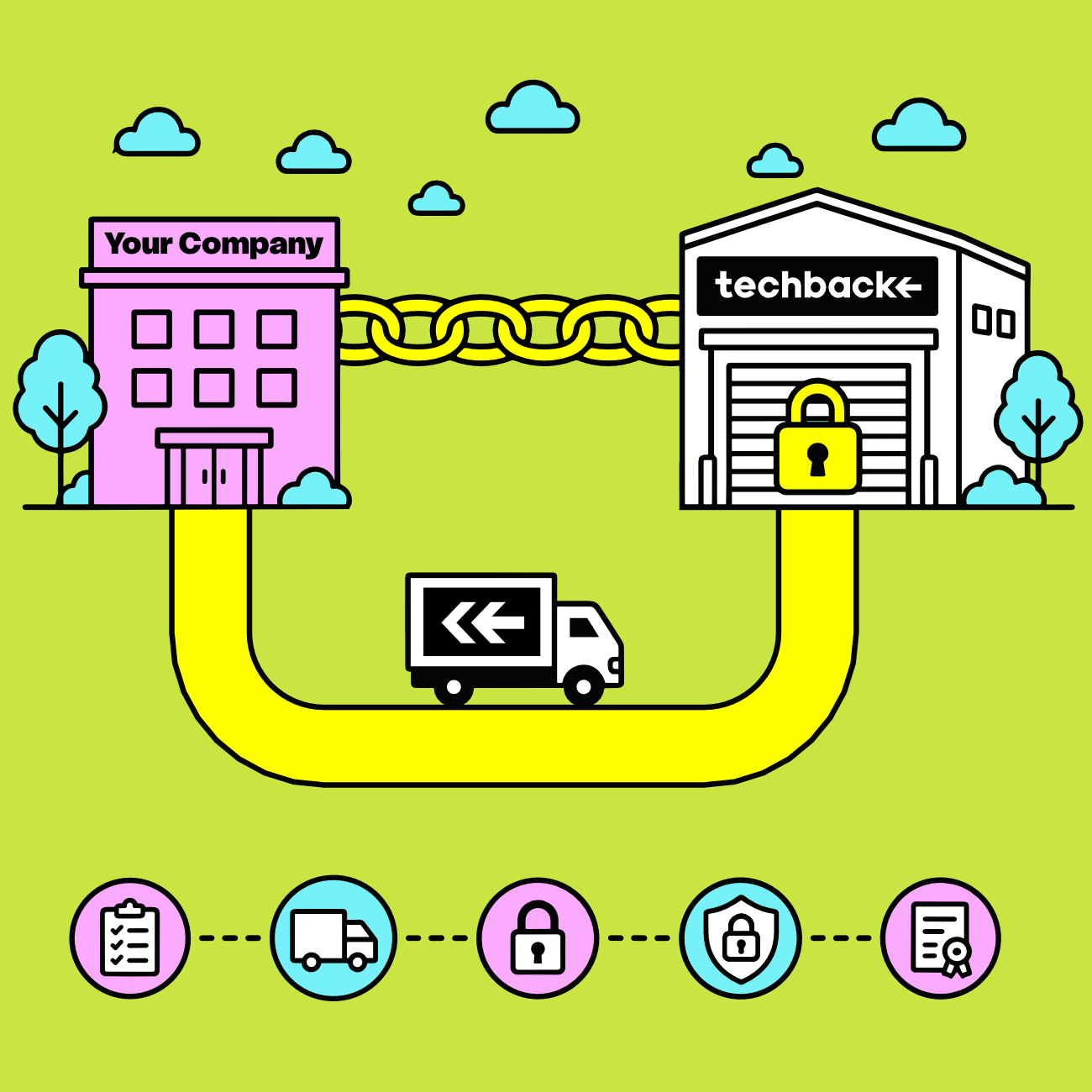
When a business retires computers, servers, or hard drives, protecting the data isn't just about what happens at the end.
It's about everything that happens in between. That's what chain of custody means.
Chain of custody is the documented process of tracking computers, hard drives, servers, and other data-bearing IT assets from the moment they leave your organization until secure data destruction or sanitization is complete. It creates a record of who handled your equipment, where it went, and what happened to it at every transfer, handoff, and stage of the process, helping ensure sensitive information remains tracked and protected from pickup through final disposition.
For businesses, chain of custody is one of the most important parts of secure IT asset disposition (ITAD) because it creates accountability throughout the entire equipment retirement process. If you're unfamiliar with ITAD read this, then our guide to How to Dispose of Business Computers Securely walks through the entire retirement process from inventory and secure pickup to data destruction and final recycling
Why is a secure chain of custody important?
Think about everything that can happen between an office and a recycling facility.
Laptops are loaded into a vehicle.
Hard drives can be transported over many miles if you don’t have a local partner like TechBack.
Devices are unloaded, secured, processed, documented, and ultimately sanitized or destroyed.
Without a documented chain of custody, there can be unanswered questions about where your computers and hard drives have been, who handled them, when custody changed hands, and whether sensitive company data remained protected throughout transportation, processing, and final data destruction.
A strong chain of custody helps eliminate those unknowns.
For many businesses, that's every bit as important as the destruction method itself. If you're curious how those destruction methods are chosen, our article Hard Drive Wiping vs. Physical Destruction: Which Is Right for Your Business? explains when each approach is appropriate.
What are the steps in a secure chain of custody?
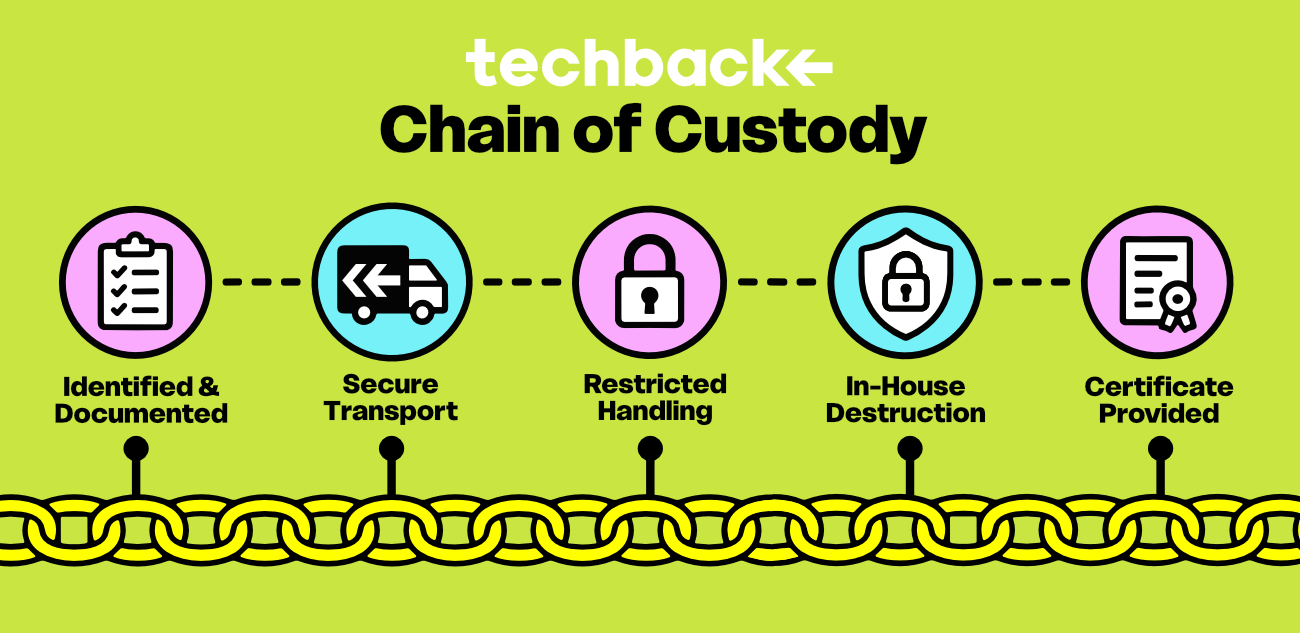
While every electronics recycling and ITAD provider has their own procedures, a secure chain of custody for business computers and data-bearing devices should include:
Documented transfer of equipment.
Secure transportation.
Restricted access to data-bearing devices.
Controlled processing inside a monitored facility.
Documentation showing when processing is complete.
Together, these steps create a continuous, documented record of who had custody of your organization's IT assets, where they were transported or stored, and how they were handled from pickup through secure data destruction and final disposition.
How TechBack protects your equipment
At TechBack, chain of custody begins the moment your computers, hard drives, servers, and other business electronics leave your organization with one of our secure business pickups in Syracuse and Central New York.
Every business pickup starts with a signed Transfer of Custody documenting when your equipment officially enters our care and establishing the first link in its chain of custody. From there, devices are transported directly to our enclosed ITAD processing facility in East Syracuse, where data-bearing equipment is immediately secured and access is limited to authorized, HIPAA-trained personnel.
From that point forward, every step happens under our control.
Depending on the device and your organization's requirements, media is securely sanitized using NIST SP 800-88 compliant methods or physically destroyed inside our monitored facility. Once processing is complete, clients receive documentation confirming how their equipment was handled.
As we like to say:
Once your data enters our facility, it never leaves again.
Chain of custody vs. a Certificate of Data Destruction: What's the difference?
These two terms are often used together, but they aren't the same thing.
A chain of custody documents who handled your equipment and how it moved through the secure process from pickup to final disposition. A Certificate of Data Destruction documents that secure processing was completed.
Together, they provide a complete picture of your organization's equipment retirement. If you'd like a closer look at what's included in that documentation, we've broken it down in What Is a Certificate of Data Destruction?
Secure business electronics recycling starts with trust.
When businesses choose an electronics recycling partner, they're trusting someone with years of sensitive information.
That's why a secure, documented chain of custody isn't just another box to check. It's the foundation that connects secure IT asset disposition (ITAD), data destruction, responsible business electronics recycling, and the documentation that proves your retired equipment was handled properly from beginning to end.
Whether you're retiring a few laptops or coordinating a company-wide technology refresh, TechBack helps businesses throughout Syracuse, Onondaga County, Central New York, the Finger Lakes Region, and surrounding New York counties securely manage every step of the process, from pickup through documented data destruction and responsible recycling under our Zero Landfill Promise.